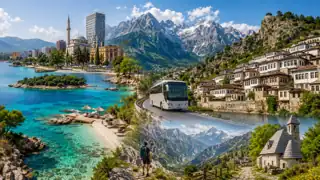
Travelling from Albania to Montenegro by bus links lively cities with one of the Adriatic's most dramatic coastlines. Whether your destination is Podgorica, Budva, Kotor or another stop, the most reliable plan begins with the service available on your date—not a timetable copied from an old article or social post.
← Back to all stories
Route guides8 min read
Albania to Montenegro by Bus: Coast, Borders and Booking
A practical guide to travelling from Albania to Montenegro by bus, including route planning, border preparation and coastal arrival tips.
By ShowMeBus editorial team
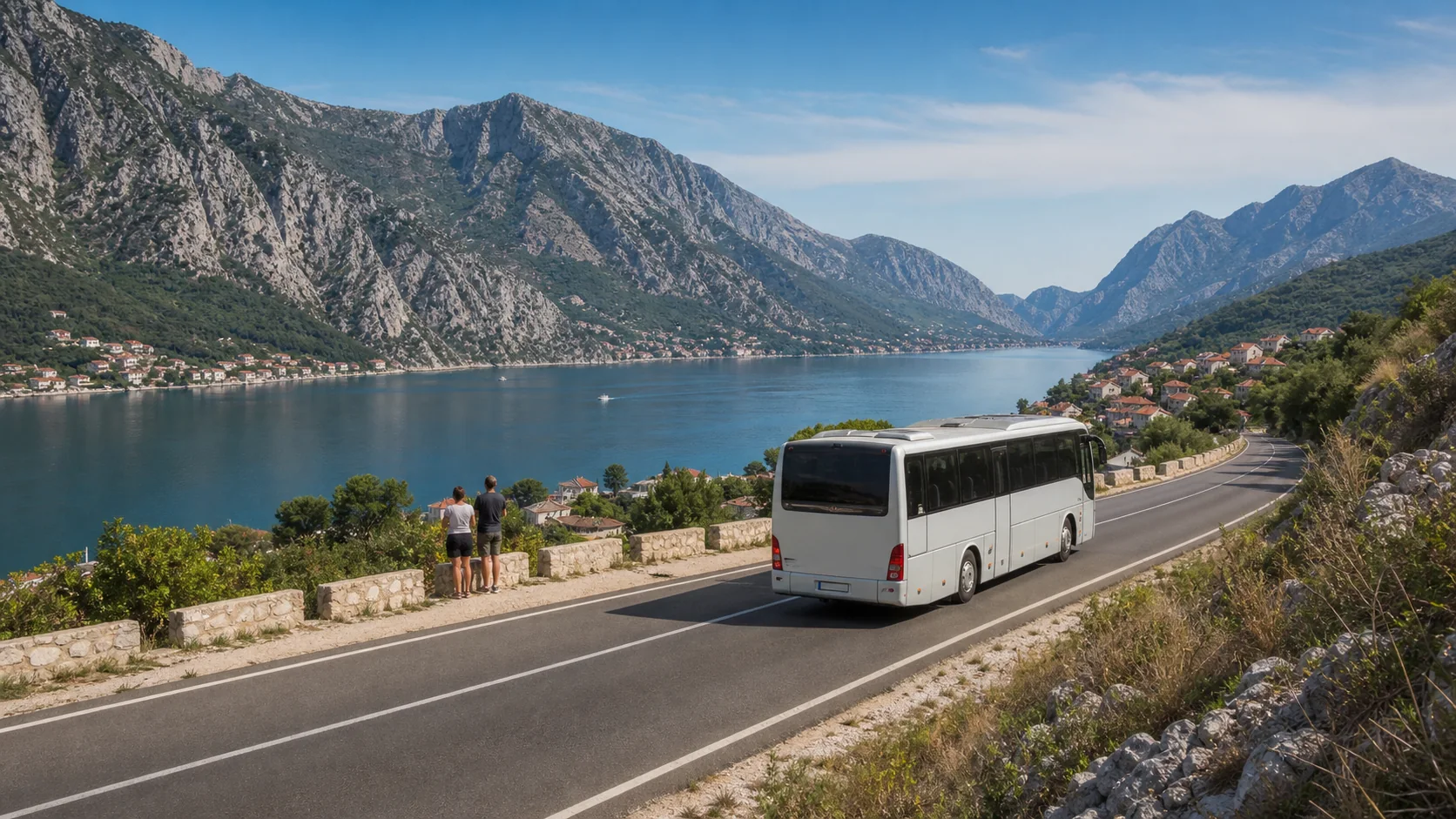
Use the ShowMeBus search to compare current journeys from your Albanian departure city. Look closely at the destination station and intermediate stops. A service to Podgorica may suit an inland itinerary, while a coastal destination may require a different journey or a separate connection.
Direct is convenient, but it is not automatically best for every traveller. Compare total duration, departure time, arrival time, transfer requirements and station locations. If a connected journey is offered, leave a sensible buffer and make sure each segment is clearly included in your itinerary.
Prepare for the border
Albania and Montenegro are separate countries, so carry the original passport or other travel document valid for your nationality. Check current entry requirements with official sources before departure, especially if your citizenship, residency status or visa history creates additional conditions.
Border queues vary with traffic and season. Summer weekends can be busier, but delays can occur at any time. Keep onward plans flexible and avoid buying a tight, separately ticketed connection after the scheduled arrival.
Luggage for coast and old towns
Pack so you can manage your own luggage at stations and on uneven streets. Historic centres often have steps, cobbles and restricted vehicle access. One manageable suitcase or backpack is usually easier than several loose bags. Keep valuables and essentials in a small bag that remains with you.
- Confirm the luggage rules shown for the service you book.
- Use a visible luggage tag without exposing unnecessary personal details.
- Pack sun protection and water for warmer months.
- Keep a light layer for air-conditioned coaches and evening arrivals.
Plan the final kilometre
The bus station may not be inside the old town or next to your accommodation. Save the address and an offline map before leaving Albania. If you arrive late, research licensed taxi or local transport options in advance rather than deciding under pressure at the station.
For a return journey, search Montenegro to Albania separately and verify the exact boarding point. The return station name or bay can differ from the place where you arrived.
Keep the itinerary current
Use the ticket details issued for your booking as your final reference, and check for operator communications before departure. ShowMeBus brings the searchable journey information and booking details together so you can spend less time piecing together uncertain sources and more time enjoying the road along the Adriatic.
Create a coast-and-mountains itinerary without a car
Albania and Montenegro are ideal neighbours for travellers who want beaches, historic towns, mountain views and lively cities in one holiday. The temptation is to rent a car and collect as many stops as possible, but a bus-based plan can feel more relaxed. Choose a few bases that connect logically, stay long enough to experience each place, and use local transfers or day tours only where public transport does not complete the final kilometre.
A common structure is to combine northern Albania with Podgorica or the Montenegrin coast. Another is to begin in Tirana, travel north, then continue toward Budva or Kotor. The correct sequence depends on the journeys operating on your dates, so build the itinerary around current results rather than copying a route from a traveller who visited in another season.
Bus versus rental car on a cross-border holiday
Driving provides freedom in rural areas, yet international rentals require careful checking. A rental agreement may restrict border crossings, require advance permission or additional documents, and apply different insurance conditions. One-way fees, fuel, tolls and parking can change the real cost. Coastal roads and old-town access can also be stressful during busy periods. If most nights are in well-connected towns, the car may spend more time parked than moving.
Coach travel replaces those tasks with a fixed departure and arrival. You do not need to negotiate narrow streets, find secure parking or appoint one person as the permanent driver. The trade-off is less spontaneity, so plan accommodation and activities around the timetable, keep transfer days simple and avoid booking an attraction that depends on an unrealistically precise arrival.
Match the destination to the experience you want
Podgorica for connections and everyday city life
Montenegro's capital can work as a practical base or an overnight pause between regions. Visitors often pass through quickly, but the city offers a different perspective from the coast and can simplify onward travel. Check where the international coach arrives and where the next service leaves; two trips shown under the same city name may use different stops.
Budva for beaches and nightlife
Budva attracts travellers who want an old town, accessible beaches and an energetic summer atmosphere. Accommodation prices and traffic can rise during popular periods, so booking a central stay can reduce local transport needs. If quiet evenings matter more than nightlife, research the exact neighbourhood instead of choosing only by distance from the old walls.
Kotor for heritage and dramatic scenery
Kotor's bay and fortified old town reward early mornings, evening walks and at least one unhurried day. Cars have limited value inside the pedestrian historic centre, while parking pressure can add stress outside it. The bus is therefore a natural choice for many visitors, provided the arrival transfer to the accommodation is understood in advance.
Add hiking without turning the trip into a transport gamble
The border region and Montenegro's mountains invite hiking, but intercity transport and trail access are separate planning questions. Do not assume an international coach will stop near a trailhead. Choose a mountain base, verify the local transfer, check whether a guide is appropriate, and keep a weather alternative. Trail conditions, seasonal access and daylight can change; current advice from local authorities, parks or experienced local operators is more valuable than a timeless list of “must-do” hikes.
Pack footwear and layers suitable for the route, but keep the overall bag manageable. Trekking poles, camping equipment or unusually large luggage may need special handling, so review the booked operator's policy before payment. Never leave passports, money, essential medication or electronics in the hold. When returning from a hike on the same day as an international departure, build a large buffer or, better, sleep near the departure city first.
Plan around the border, not against it
No itinerary can guarantee a particular border processing time. Traffic levels, passenger checks and official procedures vary. Treat the displayed duration as planning information and avoid a separately ticketed connection immediately after arrival. If a flight, ferry or infrequent bus is important, an overnight buffer is often worth more than the extra activity squeezed into the previous day.
Every passenger should verify entry rules using official sources. Requirements can depend on citizenship, residence status and the documents used for the wider trip. Carry originals in hand luggage and make sure they remain valid for the whole itinerary. Families should check the paperwork required when a child travels with one parent or another guardian.
Pack for coast, coach and cobbled streets
- Choose one suitcase or backpack you can lift and control independently.
- Keep a smaller bag for documents, valuables, water and a light layer.
- Use footwear that works on steps and polished old-town stone.
- Pack sun protection, but include rain and cooler-evening options.
- Download tickets, accommodation details and maps before crossing the border.
- Use a discreet luggage tag and check the bag before leaving each coach.
Ideas for solo travellers, couples and families
Solo travellers can use central accommodation and daytime arrivals to make navigation easier. Share the basic itinerary with someone you trust and use official station or operator staff for help. Couples may enjoy dividing responsibilities: one person watches luggage while the other confirms the platform or transfer. Families benefit from fewer hotel changes, generous station time, snacks that travel cleanly and an offline plan for reaching the accommodation.
Budget travellers should compare the whole journey cost, not only the ticket. A cheap late arrival can become expensive if it requires a private transfer or an extra night. Likewise, a direct trip may be better value than a lower-priced connection once food, waiting time and missed-connection risk are considered.
Responsible travel along the Adriatic
Popular coastal towns feel the pressure of concentrated summer tourism. Travelling by shared transport, staying more than one night and spending with local cafés, guides and family-run accommodation can make the visit more considered. Carry reusable essentials, respect beach and trail rules, and do not treat viewpoints or residential lanes as private photo sets.
Outside peak periods, some places are quieter and some services may be less frequent. That can be a rewarding time to travel if you confirm transport and opening hours first. In every season, avoid claims that a route, price or departure is permanent; the live search and issued ticket remain the relevant sources for your date.
Build the trip in the right order
First choose two or three bases. Second, search the international and major intercity legs. Third, select accommodation that fits the actual arrival points. Only then add hikes, boat trips, restaurant reservations and other fixed activities. This order prevents an attractive but fragile itinerary from collapsing because the transport does not support it.
Finally, search the return or onward journey before buying the first segment. A car-free Albania and Montenegro holiday is entirely realistic when the route is deliberate. The bus handles the difficult cross-border driving, while a slower schedule gives you more time for the coast, mountain landscapes and historic streets that make the journey worthwhile.